
Are sardines healthy?
Yes! Sardines are among the most nutrient-dense fish you can keep in a pantry. They're exceptionally high in long-chain omega-3 fatty acids, one of the best non-dairy sources of calcium there is, rich in protein and very low in mercury. A single 60g serve of ours delivers 582mg of EPA and DHA.
The internet, worked this out a couple of years ago and we're not going to pretend we discovered it, sardines are having their moment and in our opinion it's thoroughly deserved.
Here's what we'd add, having sold rather a lot of them. The case for sardines isn't really the nutrition, extraordinary though the numbers are. It's that a few tins in the cupboard mean you are never truly stuck. No thawing, no planning, no six o'clock negotiation with yourself about what's for dinner. Ten minutes, and something genuinely good on a plate.
One thing before we start, though: tins vary enormously. Two sardine tins sitting on the same shelf can be entirely different products, different fish quality, different canning processes and different oil. So here's the case for sardines, and then the more useful part, which is how to tell a good tin from a bad one.
What's in a tin of sardines?
A great deal, for something that costs less than a coffee. Our MSC sardines in organic extra virgin olive oil:
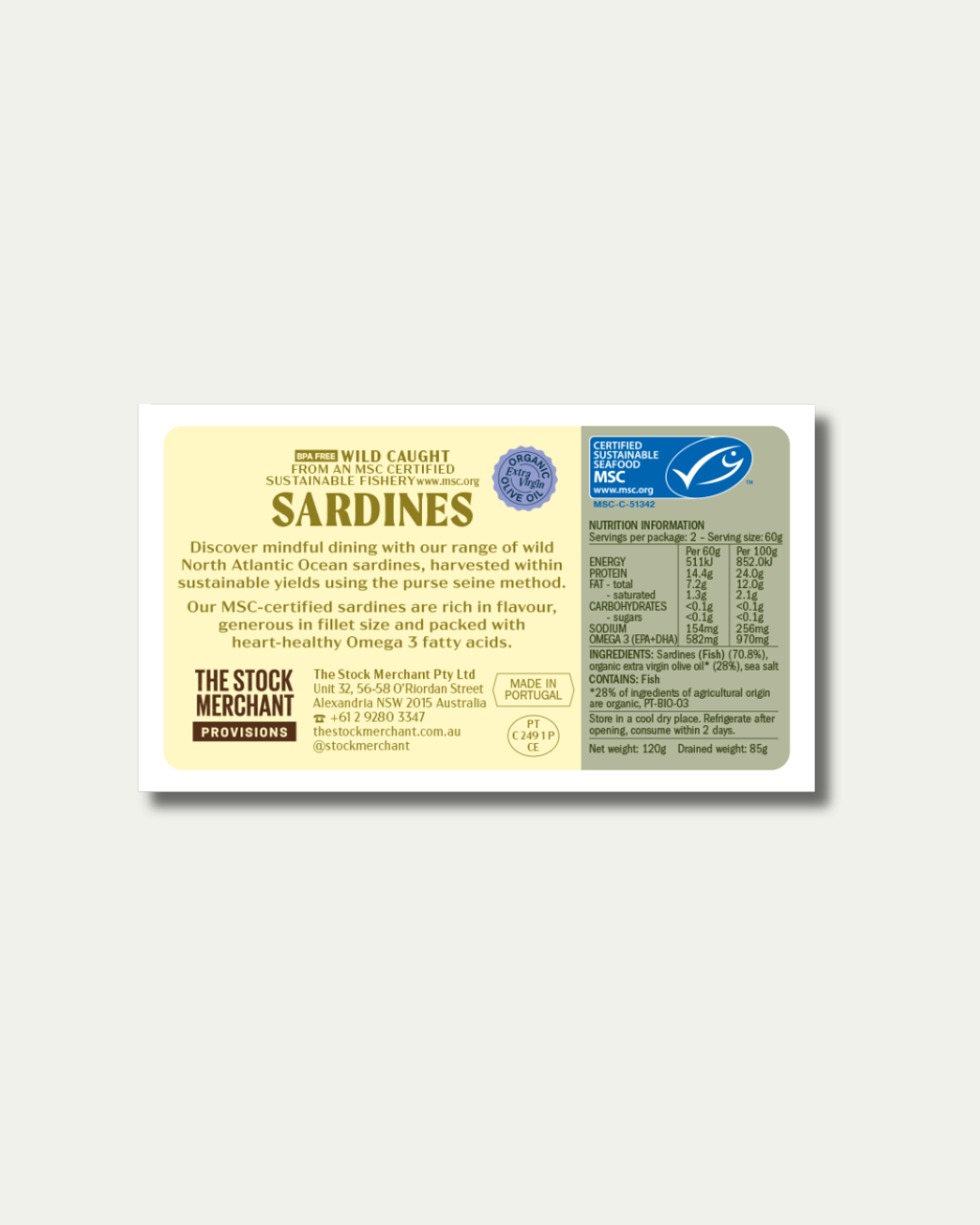
| Per 100g | Per 60g serve | |
|---|---|---|
| Energy | 852kJ | 511kJ |
| Protein | 24.0g | 14.4g |
| Omega-3 (EPA+DHA) | 970mg | 582mg |
| Total fat | 12.0g | 7.2g |
| Saturated fat | 2.1g | 1.3g |
| Carbohydrate | <0.1g | <0.1g |
| Sodium | 256mg | 154mg |
Ingredients: sardines, organic extra virgin olive oil, sea salt. That's the list.
Sardines are also a useful source of vitamin B12, selenium, phosphorus and vitamin D, one of a small handful of foods that supply vitamin D at all.
Why should I eat sardines?
Because they solve several problems at once, and there aren't many foods that do.
1. They give you omega-3 in a form your body can actually use.
EPA and DHA aren't optional extras, DHA is a structural component of brain and retinal tissue, literally part of what those things are made from, and both contribute to normal heart and brain function. The catch is conversion. Your body turns plant omega-3, the ALA in flax, chia and walnuts, into EPA and DHA at a low and unreliable rate, which means a lot of people diligently stirring chia into things aren't getting what they think they are. Oily fish is the direct route, with no conversion step to fail at.
2. They push back against a real imbalance in how we eat now.
Over the past century the omega-6 in the average diet has climbed enormously, mostly through refined seed oils in processed food, while long-chain omega-3 has stayed roughly where it was. Oily fish is the most efficient way to move that balance back.
3. They're one of the best non-dairy calcium sources going.
The bones are soft, edible and stay in the tin. Bones are where calcium lives. Published figures for canned sardines put it at around 382mg per 100g, roughly three times what you'd get from milk. If you don't do dairy, or you've reached the age where someone has started mentioning bone density to you, this is a considerably more appealing solution than a supplement.
4. They come packed in olive oil, not seed oil, and that matters far more than a packing medium should.
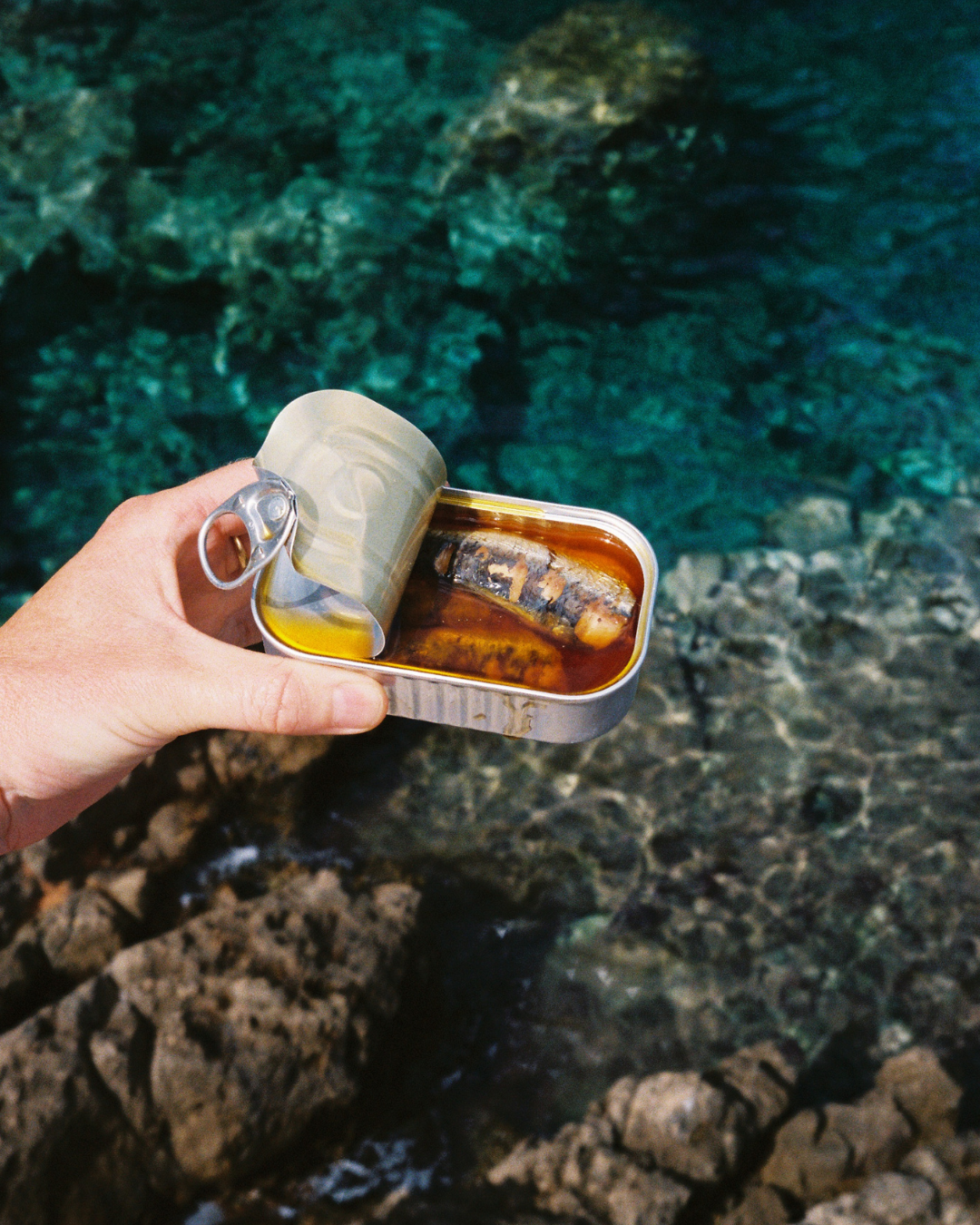
Our 120g tin is 28% certified organic extra virgin olive oil. That's about 34g, roughly two and a half tablespoons, sitting in there with the fish. And since we keep telling you to use that oil rather than pour it away, you're eating most of it.
So this isn't a footnote about what the fish is stored in. You're choosing which two and a half tablespoons of oil you eat.
Most tinned fish is packed in sunflower, soybean, canola, or something labelled only as "vegetable oil." They are high in linoleic acid, or omega-6. That's the side of the balance modern diets already carry too much of. Packing an omega-3 food in an omega-6 oil is working against the reason you picked it up.
The processing differs too. Extra virgin olive oil is mechanically pressed from the fruit, unrefined, and arrives with its monounsaturated fat and polyphenols intact. Extra virgin is a grade, not a marketing word. Refined seed oils are generally extracted with heat and solvents, then bleached and deodorised, because the crude oil isn't pleasant to eat as it comes.
5. They're proper protein, not a snack.
14.4g in a 60g serve, and the complete kind. Which is the unglamorous reason sardines on toast at lunch means you're not standing in front of the pantry at four in the afternoon, wondering what happened.
6. They cover the two nutrients most people are quietly short on.
Vitamin D barely occurs in food, most of us make it from sunlight, and in Australia sensible sun avoidance means deficiency is more common than our climate would suggest. Oily fish is one of the few real dietary sources. And B12, which supports normal red blood cell formation and nervous system function, occurs almost exclusively in animal foods and is the first thing to slip when people cut back on red meat.
Pantry Note
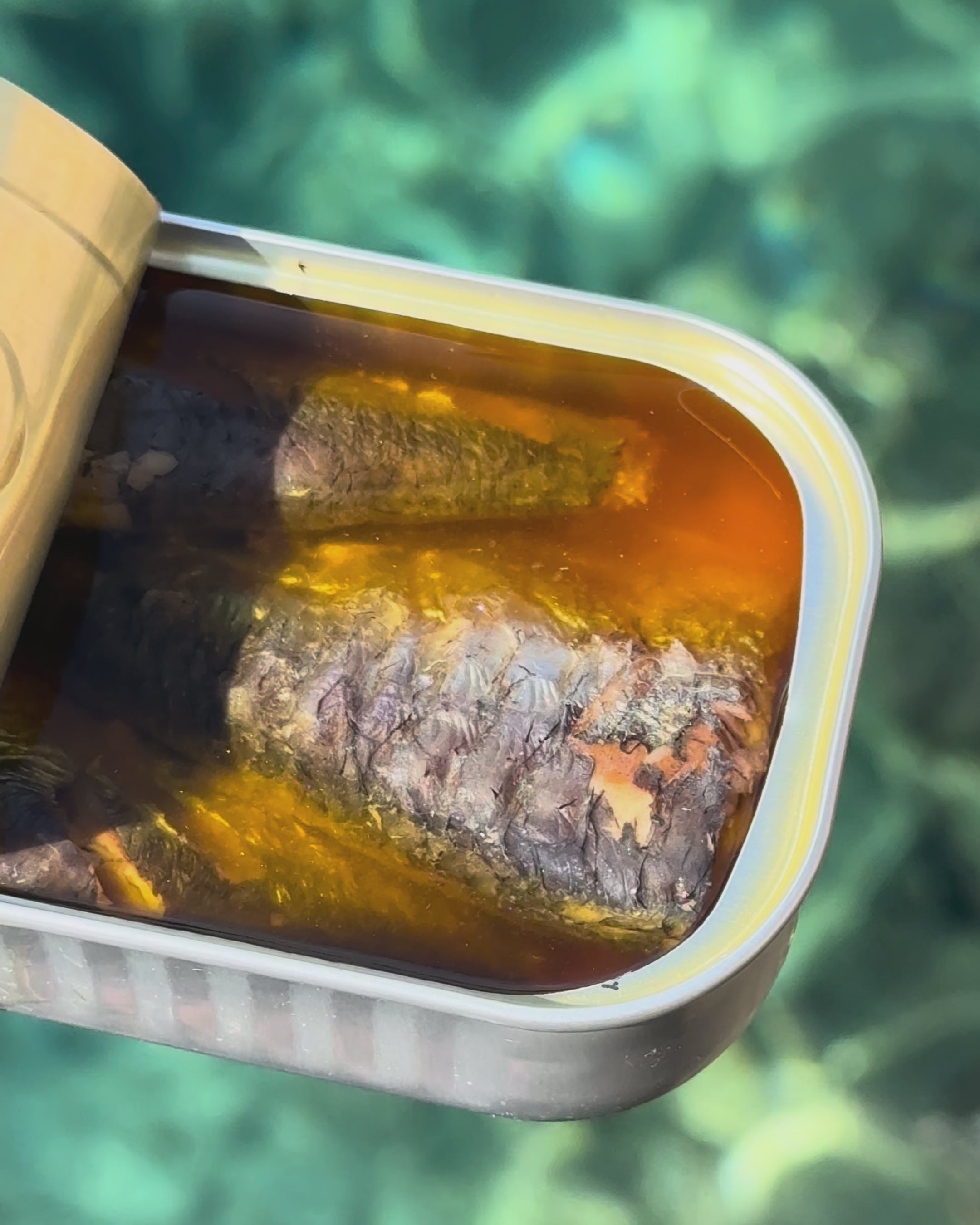
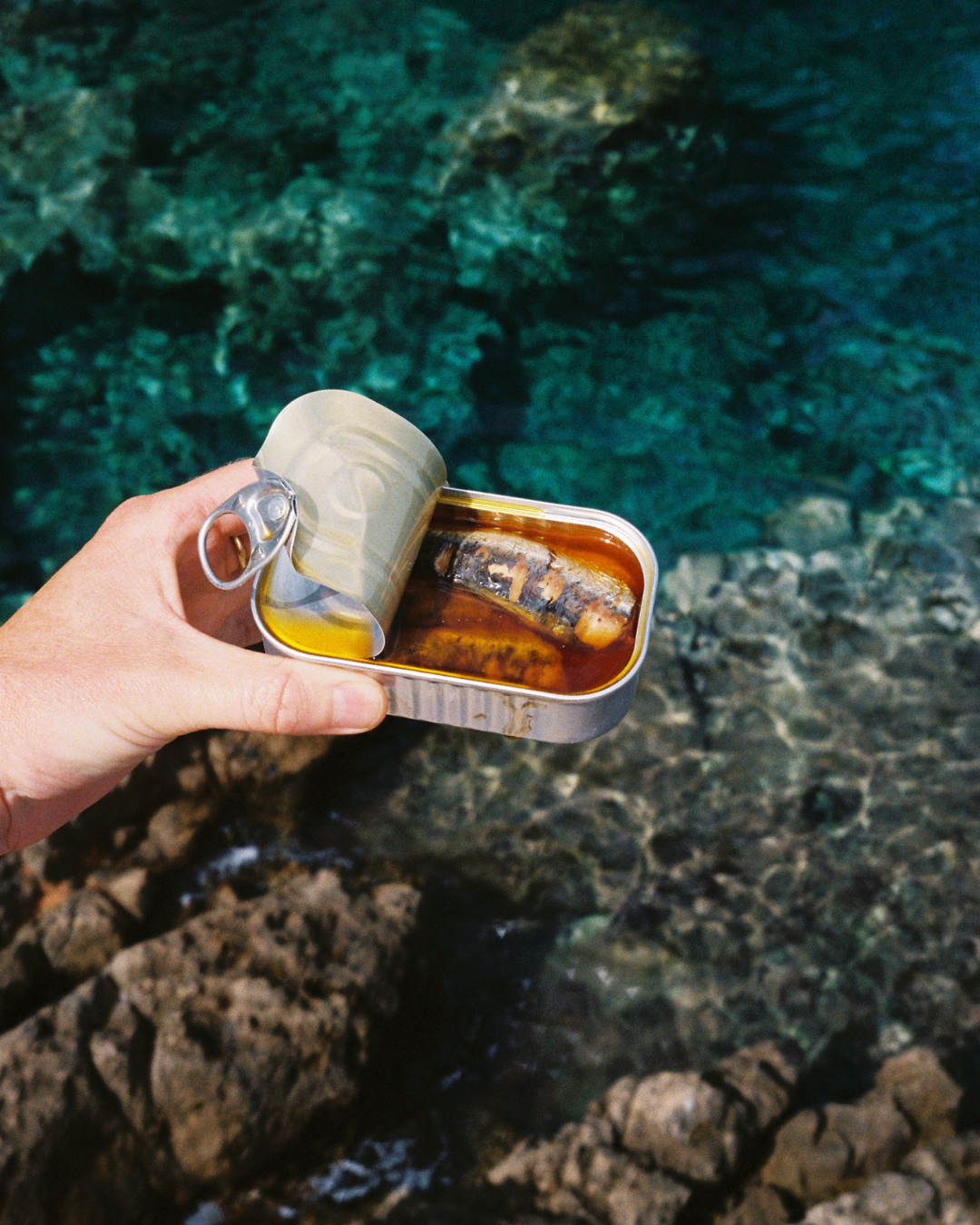
The oil is not packing material. It's sat with the fish for months and tastes like it. Tip it over the toast, dress the salad you're eating alongside, fold it through pasta. Just don't send good organic olive oil down the sink, you paid for it.
Are sardines a good source of omega-3?
They're one of the best there is and this is the number worth remembering.
Australia's NHMRC sets a Suggested Dietary Target for long-chain omega-3 (EPA, DPA and DHA combined) of 430mg a day for women and 610mg a day for men. The bare Adequate Intake sits much lower, at 90mg and 160mg.
One 60g serve of our sardines delivers 582mg.
So a single serve clears a woman's daily target outright, gets a man to within a whisker of his, and comes in at roughly six times the adequate intake either way. From a tin, for under seven dollars, with no cooking involved.
Most Australians don't come close to the target. One tin does most of the work.
Are sardines high in mercury? How often can you eat them?
Sardines are among the lowest-mercury seafoods available, and there's no limit on how often you can eat them.
Mercury concentrates in the biggest, longest-lived predators. In Australia the species FSANZ singles out are shark (sold as flake), swordfish and marlin, orange roughy and catfish. Most fish sit well outside that group, with the general advice being two to three serves a week.
Sardines sit at the far end of the safe range. Small, short-lived, eating plankton. They never live long enough to accumulate anything worth worrying about, which is one of the few advantages of a short life.
The only thing worth watching is sodium: 154mg per serve in ours. Modest, but noticeable if tinned fish is a daily habit.
Do sardines contain calcium?
Yes, a great deal of it, and it's one of the best reasons to eat them.
The calcium is in the bones, and in tinned sardines the bones are soft, edible, and left in. Published figures for canned sardines put calcium at around 382mg per 100g. Milk sits nearer 120mg. So gram for gram, sardines carry roughly three times the calcium, and the Australian RDI for adults is 1000mg a day.
We haven't had our own tins tested for calcium, so we won't put a number on ours. But the bones are in, the way they've always been in tinned sardines.
Pantry Note
If the bones are what's been putting you off, you won't find them. Canning softens them to the point where they collapse against the roof of your mouth, and most people eating sardines have no idea they're there. Which is just as well, because they're the best thing in the tin.

Are sardines sustainable?
Genuinely, and it's one of the better stories in seafood.
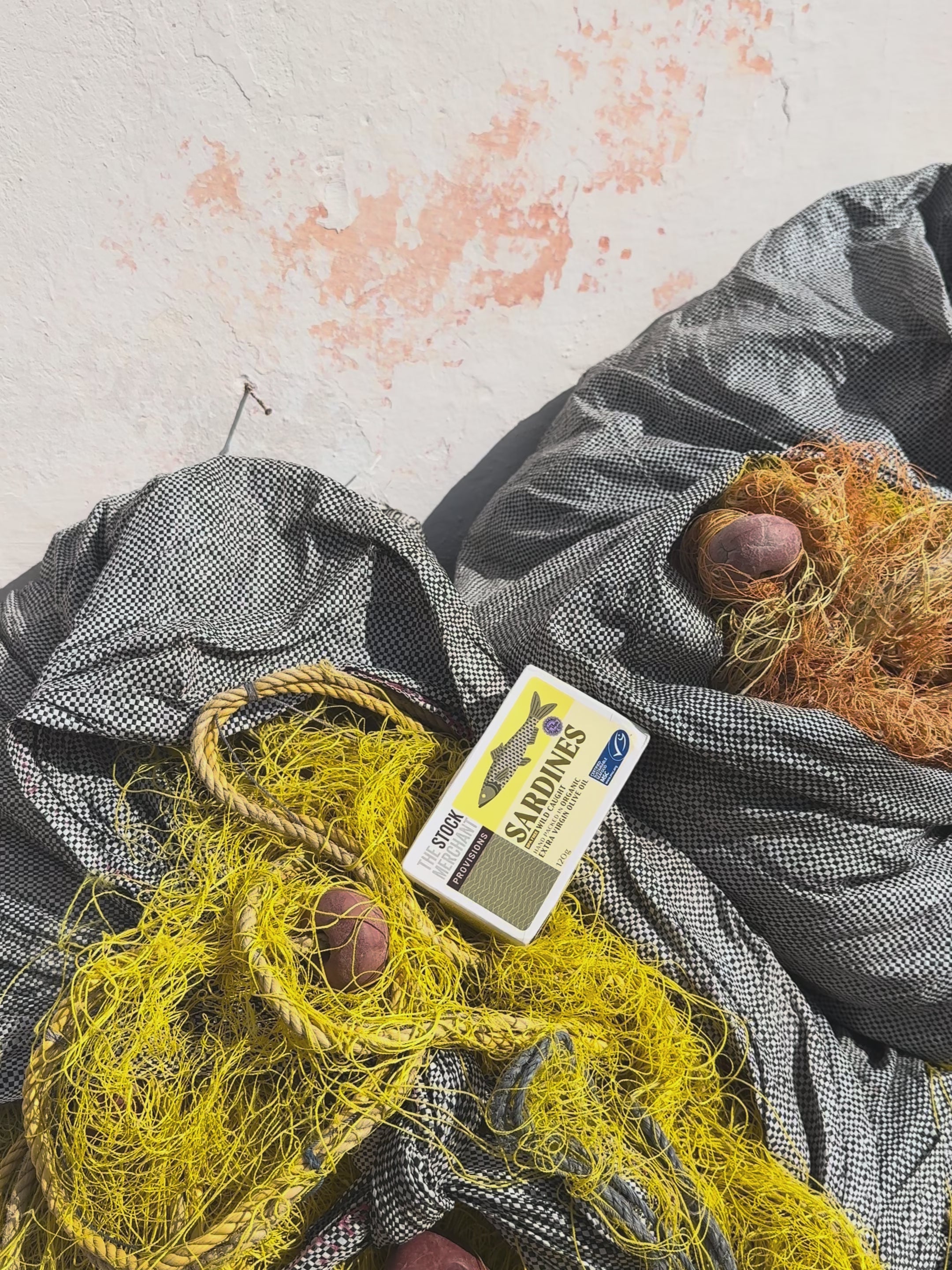
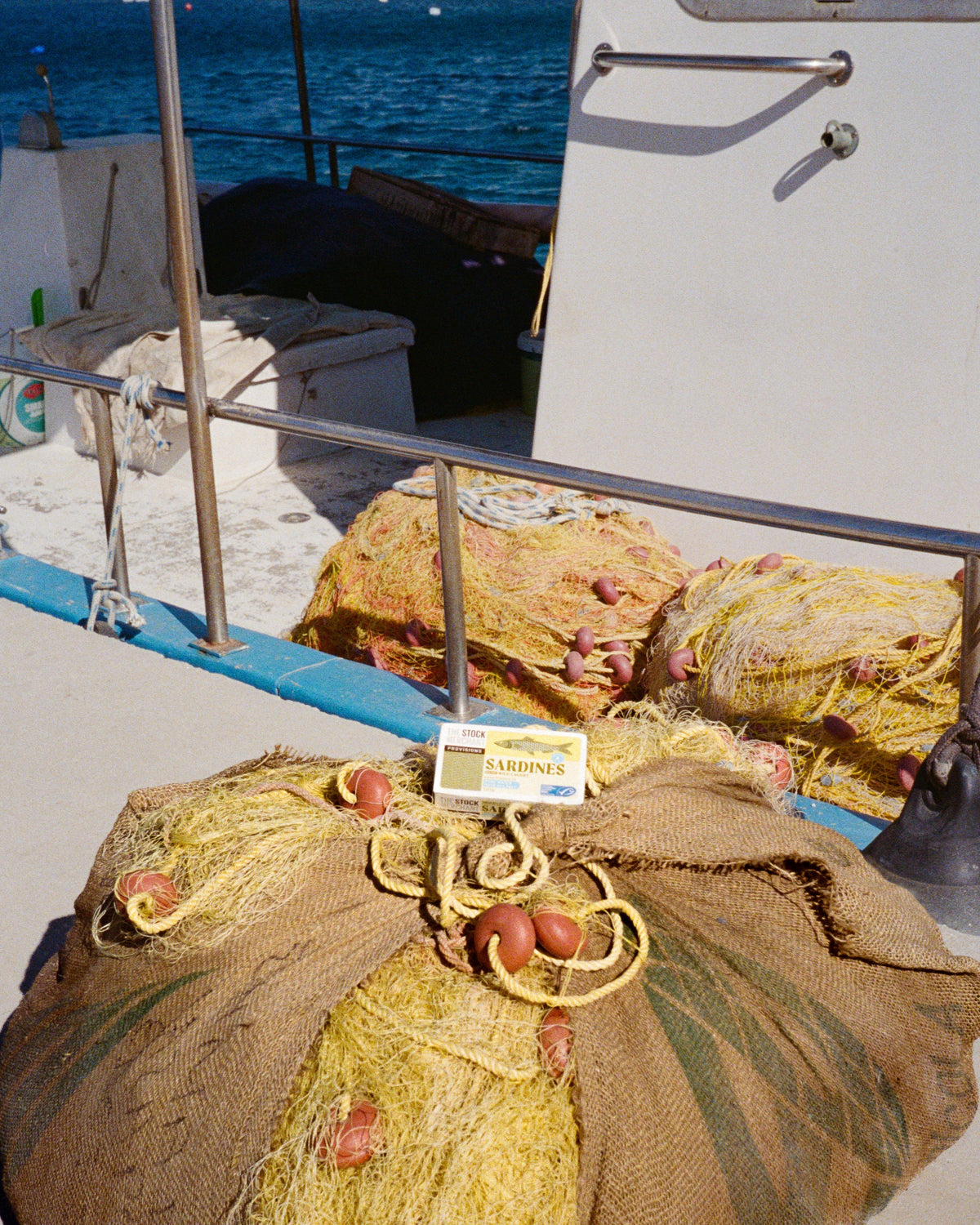
Sardines breed fast, mature young and eat plankton. Nothing about them costs the ocean much. Ours are wild-caught in the Atlantic by small-scale purse seine, then hand-filleted and packed in Portugal, by people, one fish at a time, which is why they arrive looking like fillets rather than mushy fragments. You can read more about our sardine sourcing here.
The MSC certification matters for a specific reason: it's independent, and it audits the fishery rather than the brand. We'd rather carry a logo somebody else had to grant us than print "responsibly sourced," which means whatever the person printing it wants it to mean.
Does the tin actually matter?
Enormously, and it's the part almost no article about sardines covers.
The fish is only half of what you're buying. Here's what we look at, in order:
- The oil, before anything else. It's up to a third of what's in the tin. Sunflower, soybean, canola and unspecified "vegetable oil" are the usual fillers. Extra virgin olive oil, or water, or don't bother.
- The ingredients list. It should be readable in one glance. Fish, oil, salt. If it runs on, something is being compensated for.
- Bones in. They're soft enough that you won't notice them, and they're where the calcium is. A tin that's stripped them out has quietly removed one of the best things about sardines.
- A fishery certification, not an adjective. MSC means an independent body assessed the fishery. "Sustainably sourced" on its own can mean anything.
- Hand-packed, ideally twice-cooked. Traditional producers cook the fish before it goes in the tin. Cheap ones pack it raw and let the sterilising do the cooking, which is why supermarket sardines are mushy. Few labels state it outright, so "hand-packed" or "hand-filleted" is the tell.
- A BPA-free lining. Every tin has a lining between the food and the metal, and some have epoxy resins containing BPA. Regulators consider the amounts that migrate into food to be safe, and we're not going to tell you otherwise, but a tin can sit in a cupboard for four years, and if a BPA-free lining is available we'd rather use it. Our tins are 100% BPA free.
Pantry Note
If your entire experience of sardines is a supermarket tin in an oil blend, eaten reluctantly because they are so damn fishy tasting, you haven't really tried the real deal. That's not snobbery, it's the same gap as instant coffee and a flat white. Same idea, different thing entirely.

What do sardines taste like and how do you eat them?
Richer and more savoury than tuna, with real depth to them - though how good they taste depends enormously on how they were made.
Here's the thing that separates a good tin from a cheap one, and almost nobody talks about it: ours are cooked twice.
The traditional Portuguese method cooks the sardines first, then hand-packs them into the tin with the oil, then seals and sterilises. Two distinct cooking stages. Cheap sardines skip the first one, raw fish goes into the tin and cooks once, in the can, stewing in its own liquid. That's where the mushy texture and the aggressive fishiness come from.
So if you've written sardines off, it's worth knowing what you were probably eating. It wasn't sardines you didn't like. It was sardines cooked badly, once.
Twice-cooked fish holds its shape. You can lift a fillet out whole rather than excavating a paste. And the flavour is clean and savoury rather than overwhelming, which is the single most common thing people say to us after trying ours following years of avoiding the category.
Ours come four ways: in organic extra virgin olive oil, smoky, spicy, and in pure water for anyone who wants the fish and nothing else.
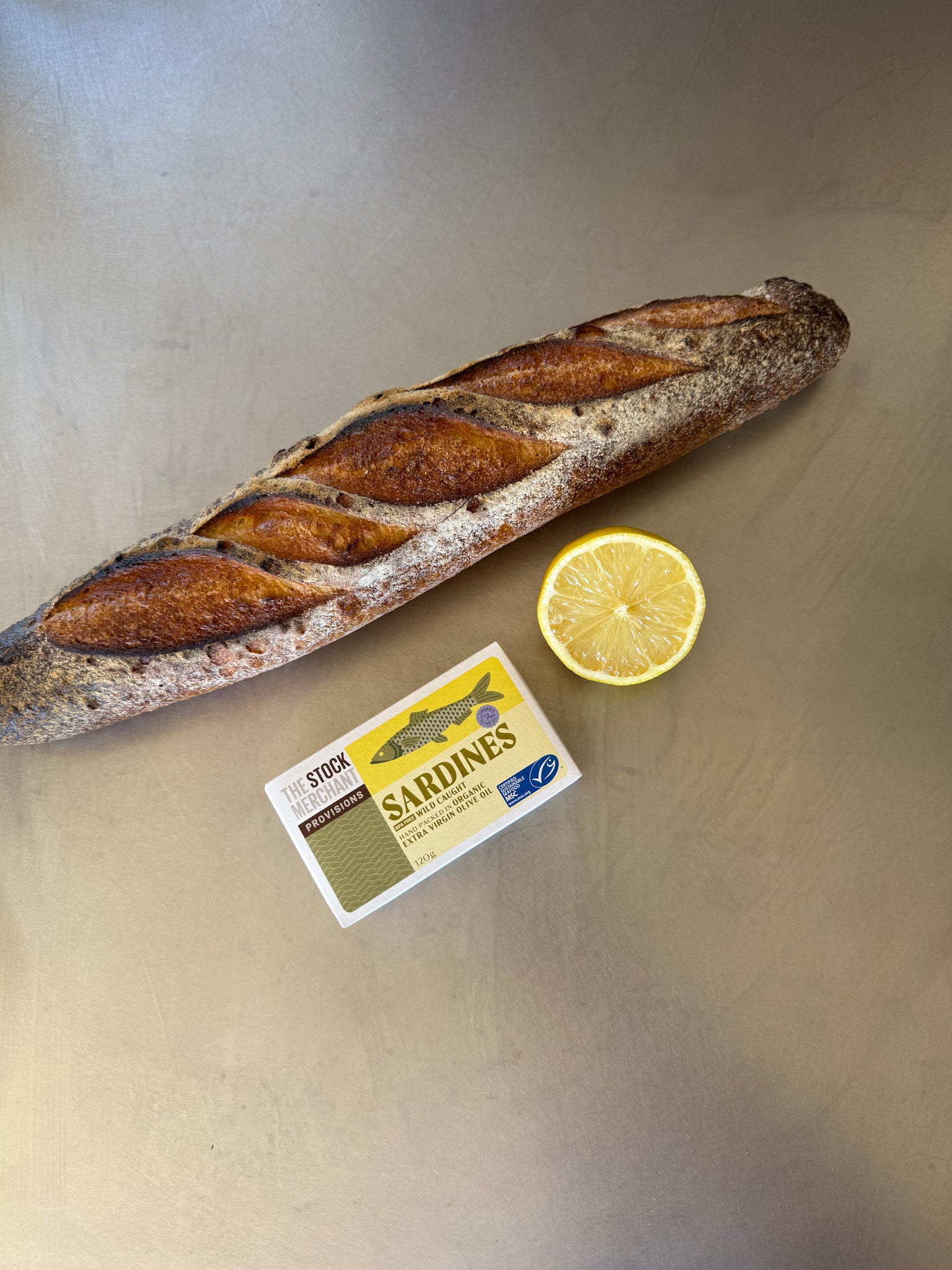
If you're still unconvinced, start with the smoky ones on hot buttered sourdough, with lemon and more black pepper than feels reasonable. The smoke does the rest of the persuading.
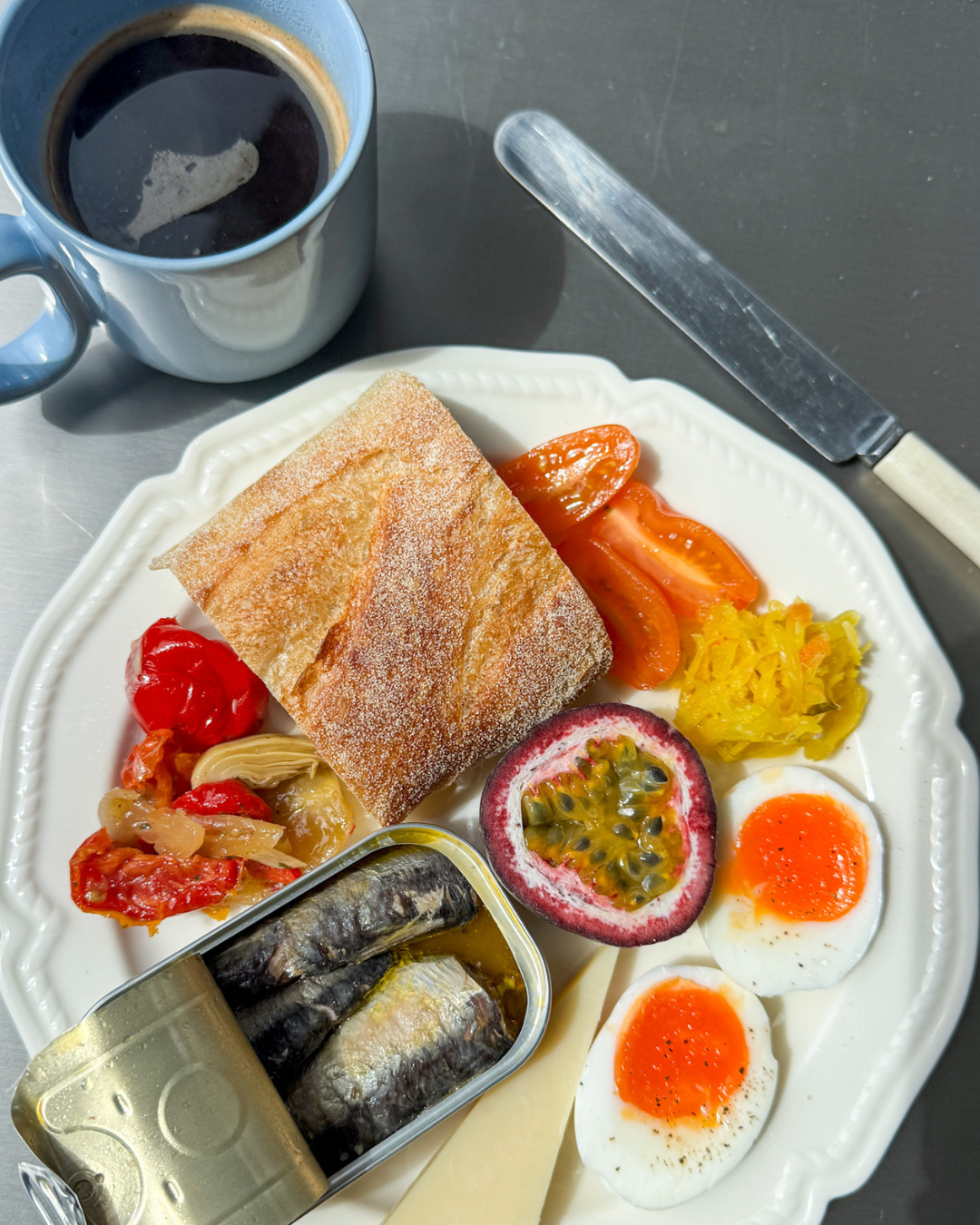
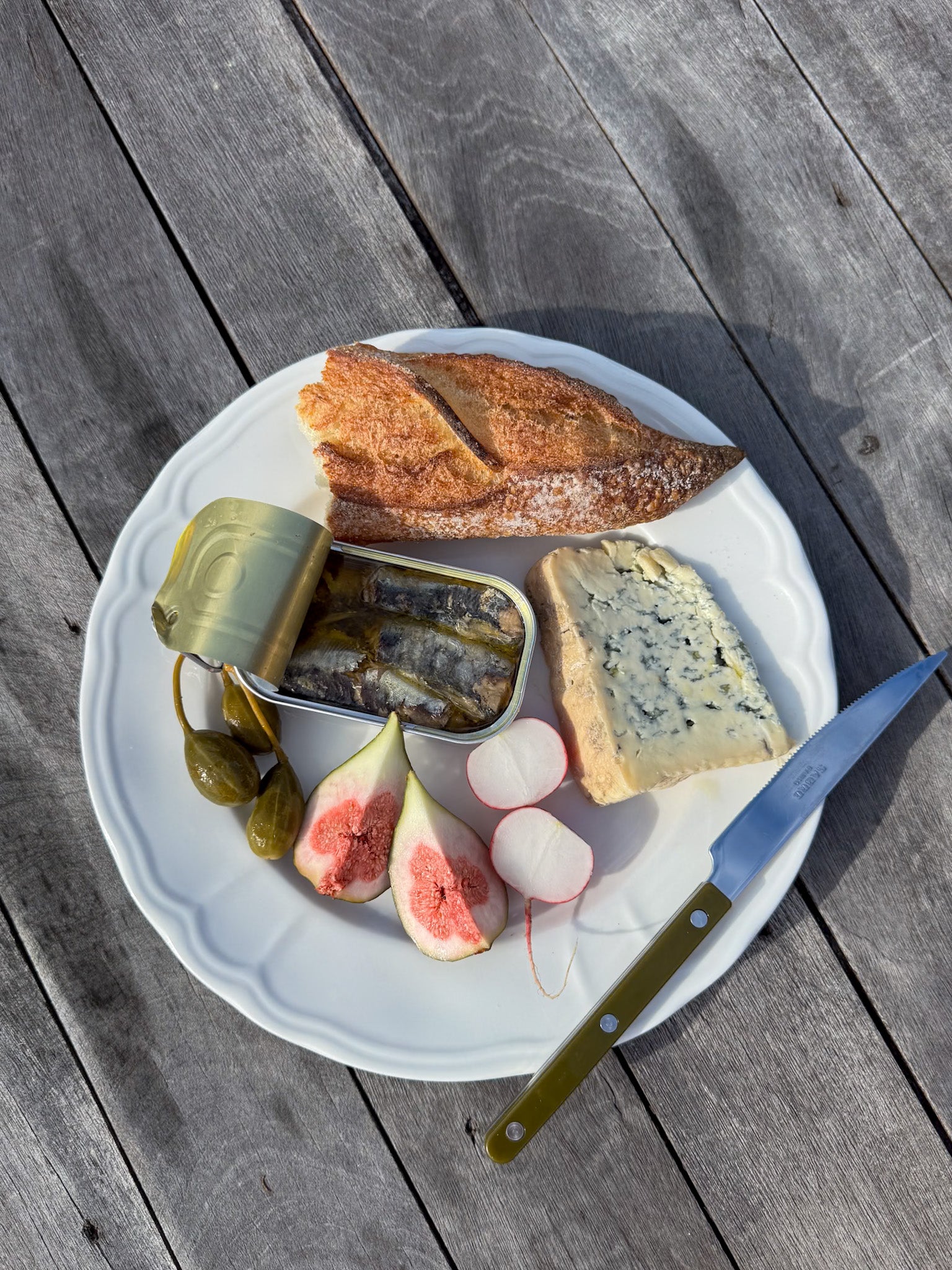
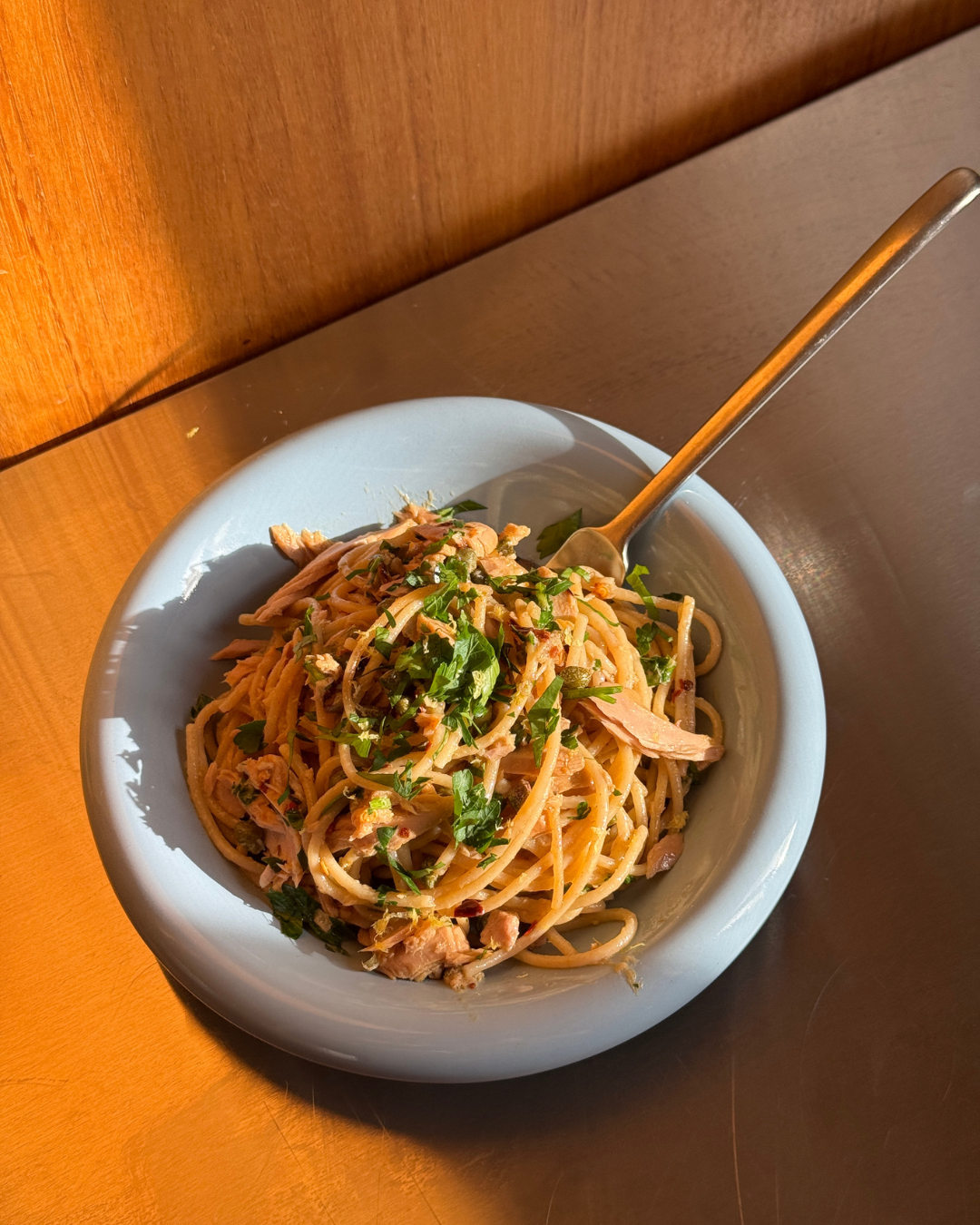
After that: through spaghetti with garlic, chilli and parsley, using the oil from the tin as the sauce. Piled onto a board with cornichons and something sharp. Mashed with lemon into a rough spread for whatever's in the bread bin. Over bone broth rice with greens, and the oil poured over at the end.
None of it takes longer than the pasta takes to cook.
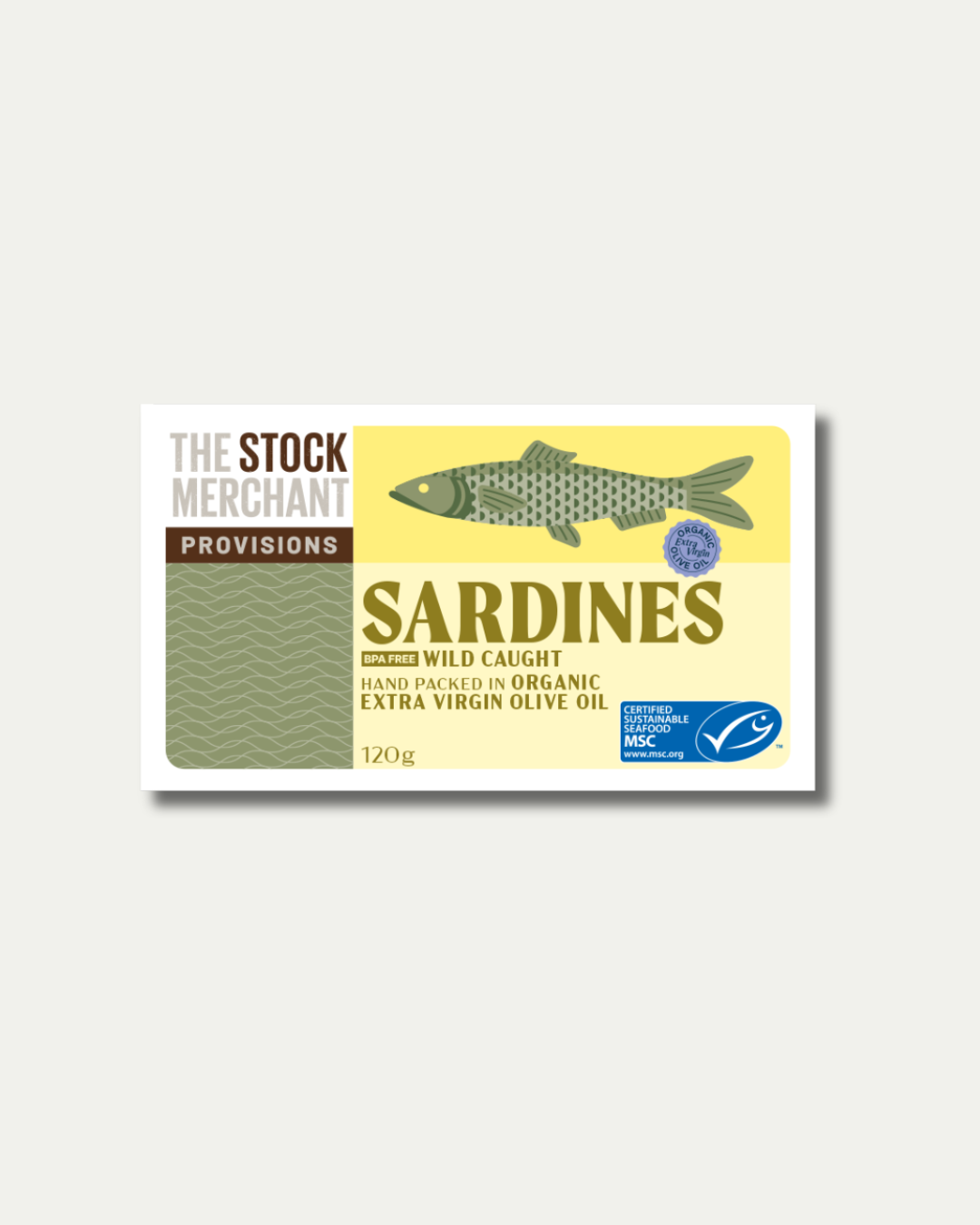
From our range: MSC Sardines in Organic EVOO - wild-caught Atlantic sardines, hand-filleted and packed in Portugal, MSC certified, BPA-free tin. 582mg of omega-3 per serve. Three ingredients: sardines, organic extra virgin olive oil, sea salt.
The Bottom Line
- Sardines are among the most nutrient-dense fish available, at 24g of protein per 100g.
- One 60g serve of ours delivers 582mg of EPA and DHA - above the NHMRC daily target of 430mg for women, and close to the 610mg target for men.
- They're among the lowest-mercury seafoods, with no frequency advice attached at all.
- The oil is up to a third of the tin, olive oil or water, never seed oils, because packing an omega-3 food in an omega-6 oil defeats the point.
- Around 382mg of calcium per 100g in canned sardines, roughly three times milk, because the bones stay in.
- MSC certification means the fishery was independently assessed, unlike vaguer sourcing language
Sources
- NHMRC: Nutrient Reference Values for Australia and New Zealand (omega-3 AI and SDT)
- Food Standards Australia New Zealand: Mercury in fish
- Australian Dietary Guidelines: fish consumption
- Marine Stewardship Council: certification standard