
Is spelt healthier than wheat?
In several measurable ways, yes. Spelt flour is lower in FODMAPs than modern wheat, its starch digests more slowly, and it carries more fibre and more minerals. It contains gluten, so it isn't for coeliacs, but for everyone else, swapping it in is one of the easiest upgrades available to a weeknight dinner.
We're partial, obviously, we love and sell the stuff.
But here's the thing we actually believe, and it's bigger than pasta: most people trying to eat better start by attempting an overhaul, and almost nobody sustains one. What does last is simple substitutes. Same dinner on a Tuesday night, but with a different grain with benefits.
Spelt is one of the best of those swaps. Here's the case, including the parts that don't flatter us.
What is spelt - and why is it also called farro?
Spelt is an ancient hulled wheat, cultivated for around 8,000 years, and one of a small family of grains that got left behind when modern wheat took over.
Now, the confusing part, which nobody explains properly:
In Italy, this family is called farro - an umbrella term covering three related grains: farro piccolo (einkorn), farro medio (emmer) and farro grande (spelt). In Australia, the same grains reach the shelf labelled spelt. And in the scientific literature you'll find them under their botanical names.
What unites these ancient grains is what didn't happen to them. Modern bread and durum wheats went through more than a century of intensive breeding - for yield, for uniformity, for milling speed, for everything to do with commercial viability and nothing to do with how they'd make you feel afterwards. These grains got left out of all that, and not for noble reasons. They were inconvenient. Lower yielding, and they cling to their husks so stubbornly they need an extra milling step nobody could see the profit in.
While the rest of the wheat family was being optimised, this lot sat in the corner being difficult. They're not museum pieces. They're the grains nobody got around to changing.
Is spelt easier to digest than wheat?
Many people find that spelt sits better than modern wheat - and there's now a credible reason why.
Monash University, who developed the low FODMAP diet, has found that spelt flour tends to be lower in total FODMAPs than modern wheat.
This is the claim we hear most about spelt, so rather than repeat it and hope, we went and read the research. It holds up better than we expected.
Here's why it matters, and it's the part that changes how people think about their own guts. FODMAPs, fructans especially, are increasingly understood to be what a lot of people are actually reacting to when they're convinced they're reacting to gluten. Which means an enormous number of people have spent years blaming the wrong compound, and therefore reaching for the wrong solution. Unnecessarily giving up an entire category of food when the culprit was one carbohydrate in one kind of flour.
Monash rates spelt pasta low FODMAP at a half-cup cooked serve; a full cup rates high. So portion genuinely matters.
And spelt contains gluten, so none of this applies if you're coeliac.
Pantry Note
If you've had that post-pasta heaviness and quietly concluded gluten was the villain, it's worth knowing the research keeps pointing somewhere else. Which is rather good news. The answer might be a different wheat rather than no wheat at all - and that's a much nicer life.

Is spelt gluten free?
No. Spelt contains gluten and is not safe for people with coeliac disease. It's a wheat. There's no grey area and anyone telling you otherwise is wrong.
You'll occasionally see it suggested that ancient wheats might be tolerable for coeliacs, on the basis that some lack certain gluten proteins. The research on that is genuinely interesting, but unfinished - the review we've drawn on states outright that far more immunological and clinical work is needed before any such claim could be made. Until that exists, the answer is no.
If you suspect coeliac disease, see your GP before changing anything. Testing requires you to still be eating gluten, so cutting it out first makes the diagnosis harder to get.
What's actually in it?
More fibre, more minerals and more antioxidant compounds than modern wheat - though the ranges are wide, because these are old grains grown in a lot of different soils.
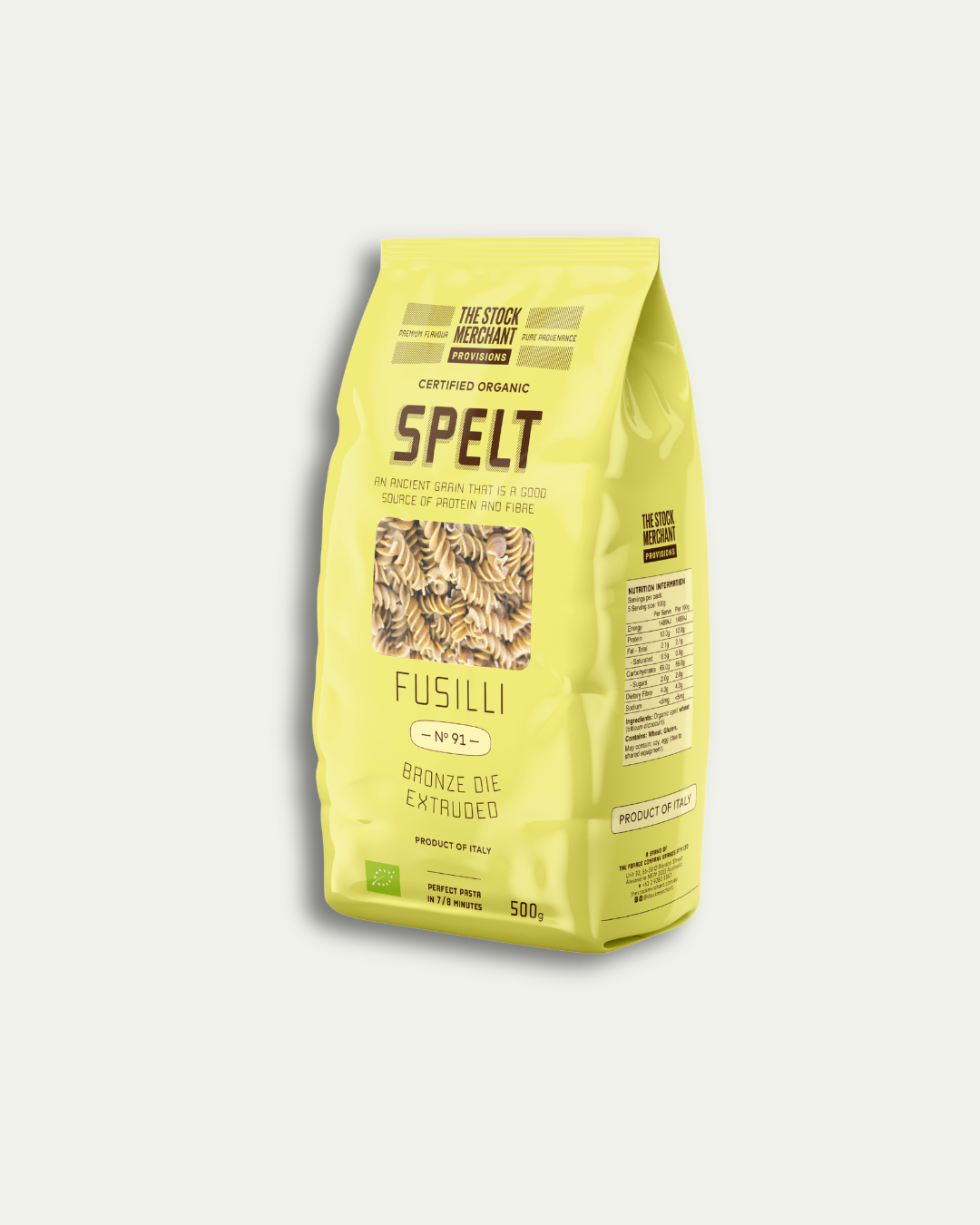
Start with what's in our bag, because it's printed on the panel and not up for debate: 4.3g of dietary fibre per 100g. Standard white pasta from modern durum usually sits closer to 2.5–3g. In something most Australians eat weekly, in a country where hardly any of us reach the recommended 25–30g of fibre a day, that gap does real work over a year of Tuesdays.
Two reasons for it. The grain carries more of its nutrition in and near the bran - and we leave a portion of wholegrain in the dough rather than milling it all down to white flour. That's also why the pasta is darker, and why it tastes of something rather than nothing.
The broader research on emmer, the farro at the heart of this family, fills in the rest. Total dietary fibre in the grain runs from 7.2% to 20.7%, averaging around 9.8% in Italian emmer, and it's mostly insoluble fibre - the kind that does the unglamorous mechanical work - alongside arabinoxylan and β-glucan. Emmer also runs higher in selenium, iron and zinc than other wheat species, and carries a decent load of phenolic compounds, tocols and lutein.
Does spelt affect blood sugar differently?
Its starch is genuinely slower to digest - and this is the finding we find most interesting of the lot.
The research on emmer measured resistant starch at 17.1–21.2% of total starch, and slowly digestible starch at 44.7–53.8%. When researchers measured how quickly the carbohydrate actually broke down, emmer came in significantly lower than other wheat species. The structure of the starch granules and the high amylose content are what slow it down.
That's the mechanism behind the thing people describe as "it just sits better" or "I'm not starving an hour later." It isn't a feeling. It's a measurable property of the grain.
There's also a small human study worth knowing about: participants with diabetes eating an emmer-based diet for six weeks showed reductions of around 11% in total lipids, triglycerides and LDL cholesterol. The same effect wasn't seen in those eating bread wheat.
Now the honest limits, because we'd rather you heard them from us. That was one small study, on flatbread rather than pasta. Emmer's measured glycaemic index came out at 63.8 - that's medium, not low, and we're not going to pretend otherwise. And we haven't had our own pasta GI tested, so there's no number of ours to quote. If you're managing diabetes, this is a conversation for your dietitian, not a food brand's blog. But we felt like this was an interesting find, so we wanted to share it with you.
Why is spelt more expensive?
Because it's harder to grow and harder to mill, and nobody has engineered those problems away.
It yields less per hectare. It holds onto its husk, so it needs de-hulling before milling can even begin. There are only around 2,500 hectares of it under cultivation in Italy, this is a small-batch grain by nature. Organic certification adds cost again, and bronze dies run slower than Teflon ones.
The flip side is that it's a grain that suits growing well. It copes with poor soils, needs little water or nitrogen, and holds its own against weeds without much help, which is precisely why it lends itself to organic farming.
We'd rather explain the price than pretend it isn't there. It isn't a premium on a story. It's what grain costs when nobody has optimised it for cheapness.
What makes a good spelt pasta?
One ingredient, and the right kind of extrusion.
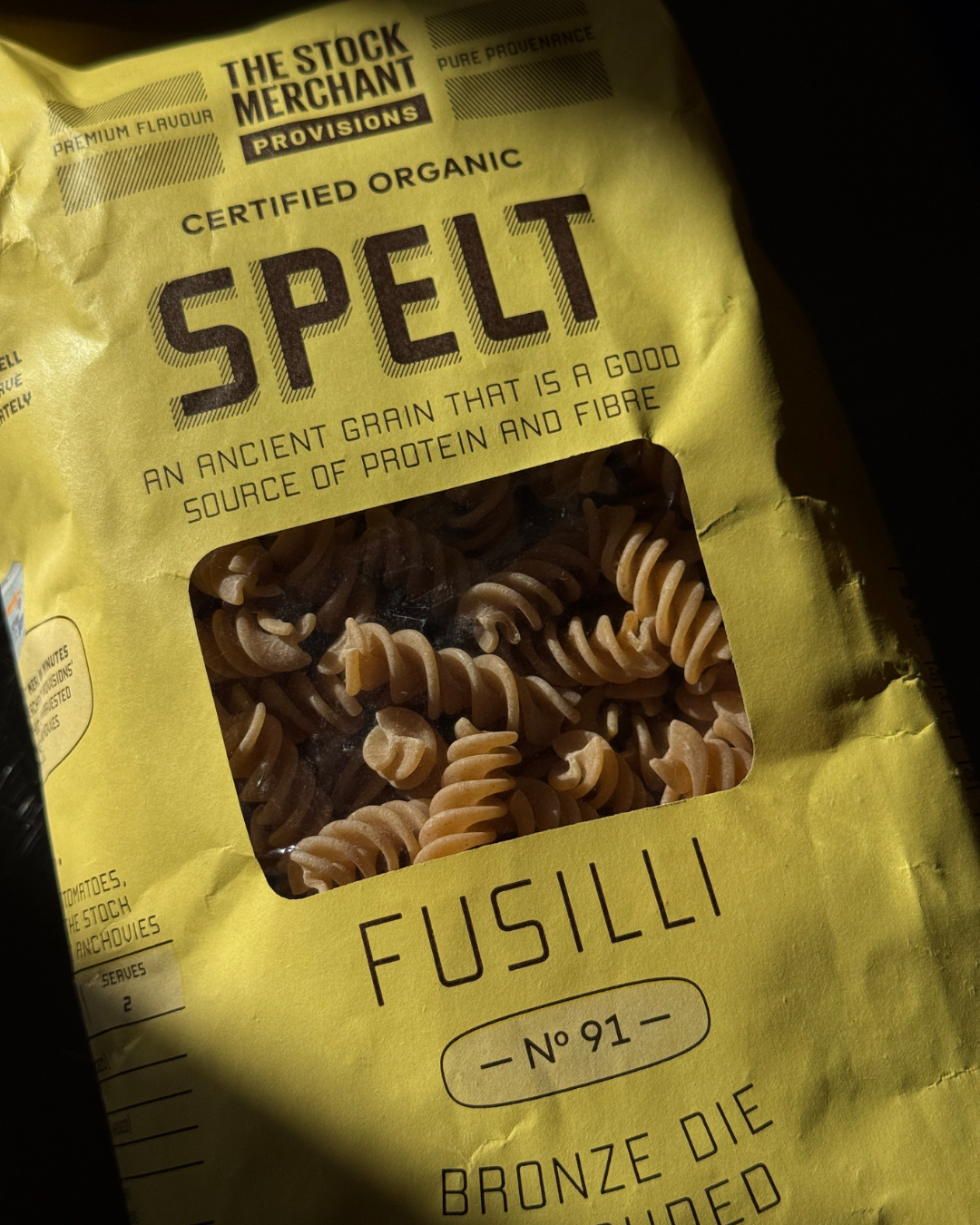
Ours is certified organic spelt flour. That's the entire ingredients list. No additives, no flavourings, nothing to help it along - because your kitchen isn't a lab and neither is ours. It's certified to the EU organic standard, the strictest in the world.
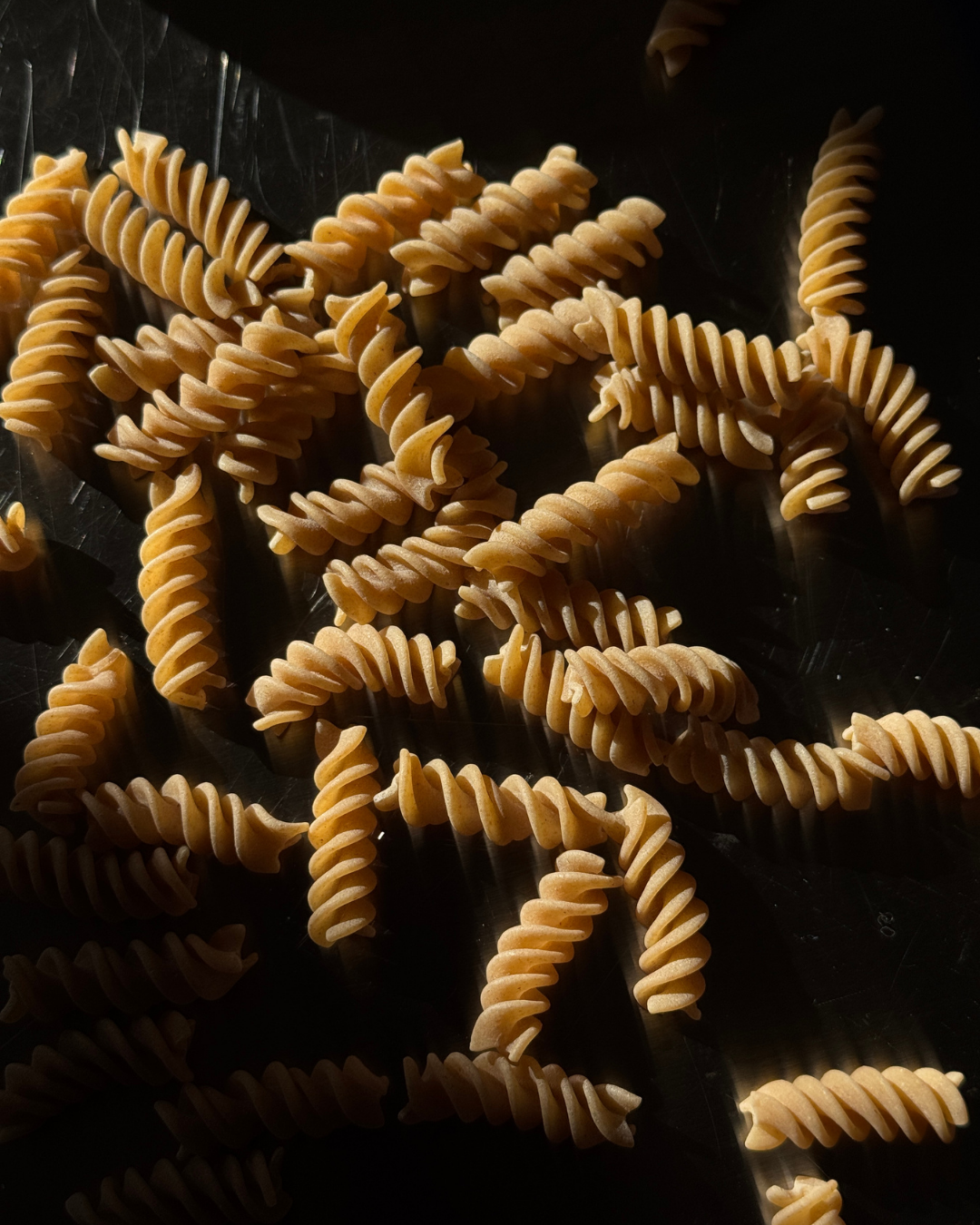
The difference you'll actually notice on the plate is the bronze die. Most pasta is pushed through Teflon moulds: quicker, cheaper, and it comes out glassy. Bronze leaves the surface rough and faintly chalky. Rough pasta grips sauce. Smooth pasta lets it slide off and pool sadly at the bottom of the bowl.
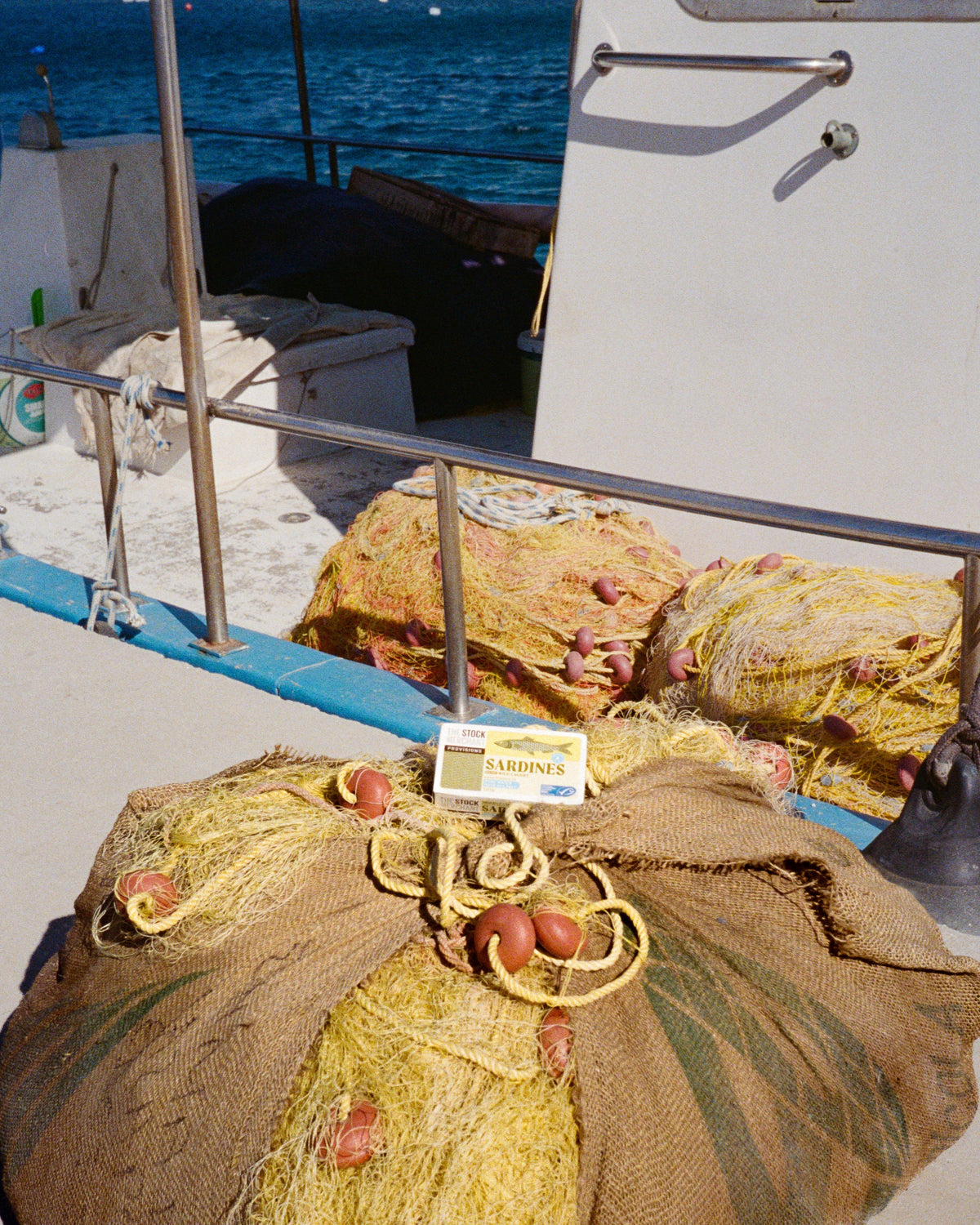
We went to Italy for this one - grown, milled and extruded there, the way it's been done for a very long time.
Pantry Note
You can spot bronze die pasta before you cook it. The surface looks matte and faintly floury rather than shiny, and it feels slightly rough between your fingers. Smooth and glossy means Teflon. It's the easiest quality check in the aisle and it costs you nothing to do - go and look at what's in your cupboard now.
From our range: Organic Spelt Pasta - one ingredient: certified organic spelt flour. Bronze die extruded in Italy. 4.3g of fibre per 100g and nothing else in the bag.
What does spelt pasta taste like?
Nuttier, deeper and more savoury than white pasta, with a firmer bite and a darker colour.
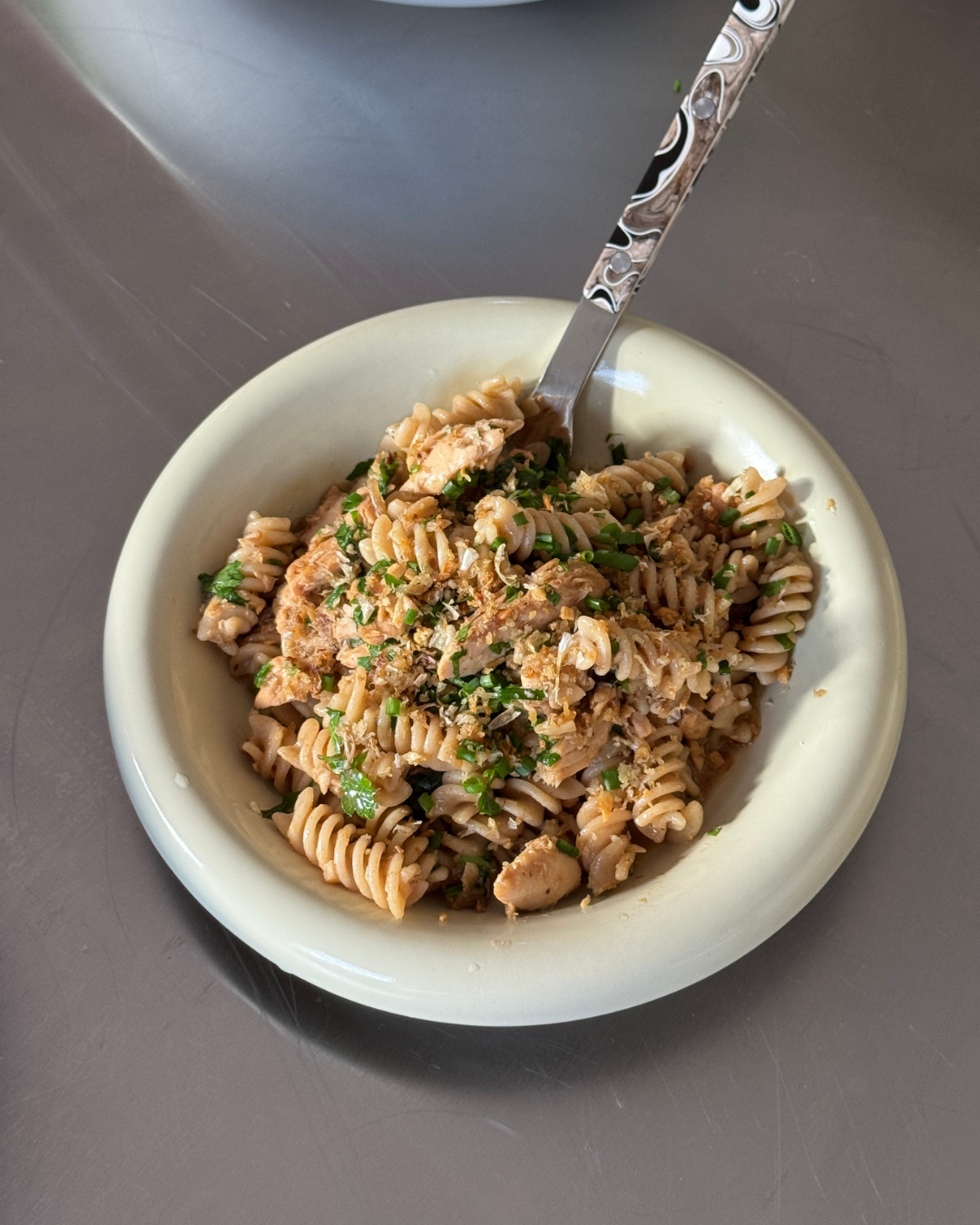
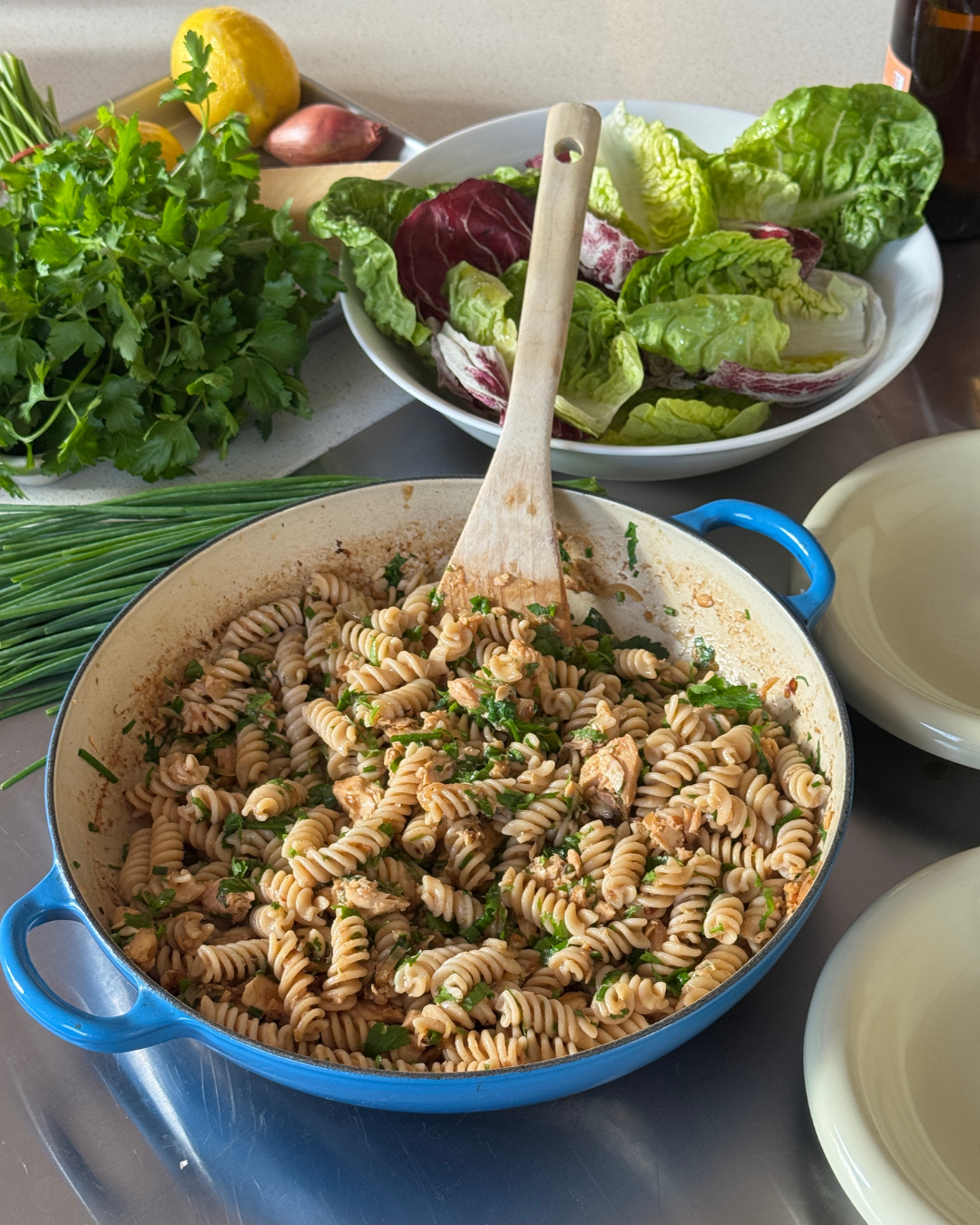
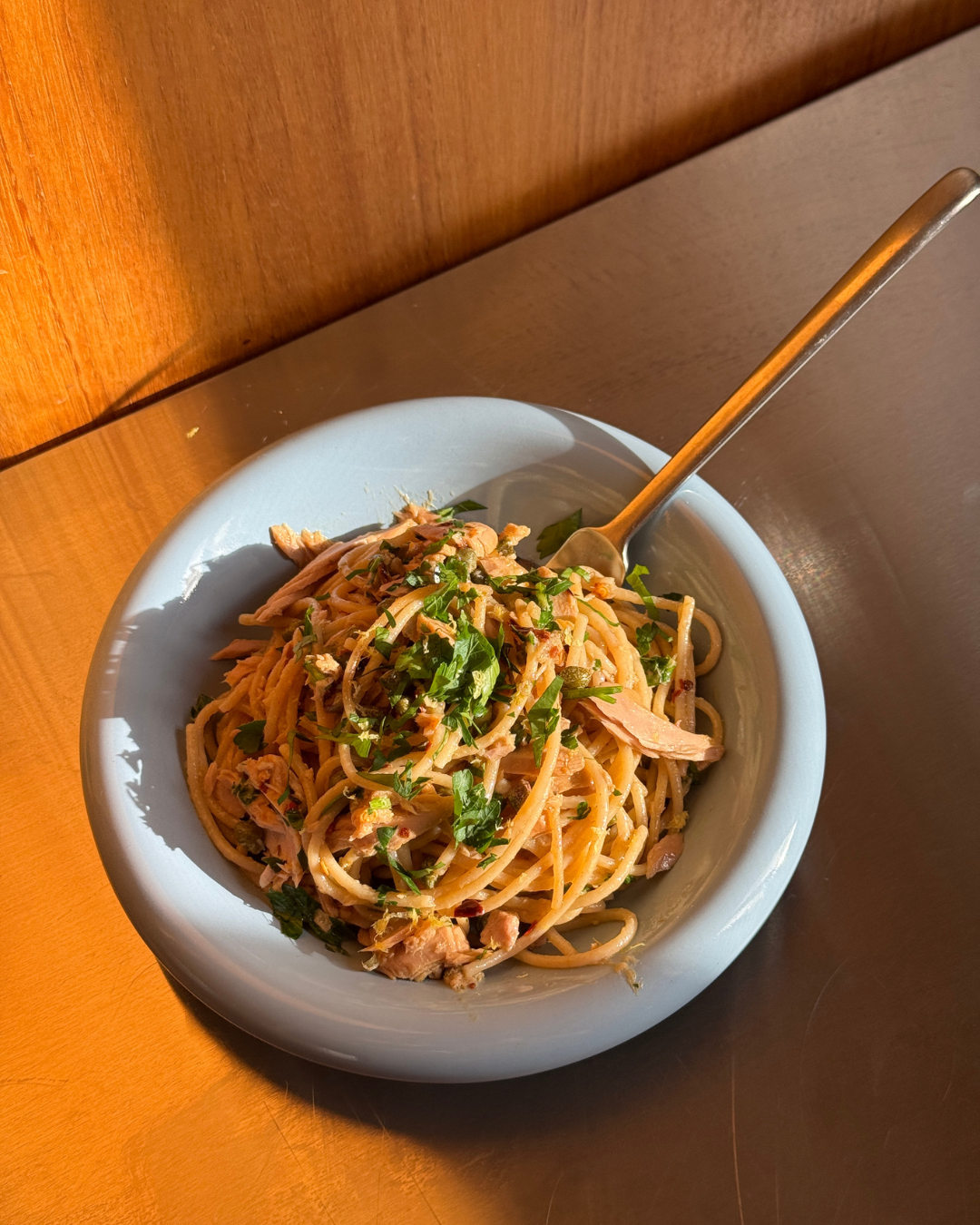
This is the part we'd lead with if health had nothing to do with it — and honestly, it's why we stock it. The wholegrain gives it actual character instead of making it a neutral raft for sauce. It holds its own against a robust ragù without vanishing underneath it, and it's good enough on its own that olive oil, garlic and parsley is a proper dinner rather than a sad one.
Which is the whole argument, really. A swap only sticks if the new thing is better to eat. Nobody keeps buying the virtuous option out of duty.
Pantry Note
Save a cup of the cooking water before you drain. The starch coming off bronze die pasta is what turns a jar of sauce into something that clings to every strand instead of sitting in a puddle beneath it. Most of the difference between home pasta and restaurant pasta lives in that cup, and it costs nothing.
The Bottom Line
- Spelt is an ancient hulled wheat - sold as spelt in Australia, called farro in Italy, and studied as emmer (Triticum dicoccum) in much of the literature.
- Monash University has found spelt flour lower in total FODMAPs than modern wheat, and rates spelt pasta low FODMAP at a half-cup cooked serve.
- Our spelt pasta carries 4.3g of fibre per 100g, well above standard white pasta.
- Research on emmer shows high resistant starch and significantly slower carbohydrate digestion than other wheat species.
- It runs higher in selenium, iron and zinc, and carries phenolic compounds, tocols and lutein.
- Measured GI is medium (63.8), not low - and our pasta hasn't been GI tested.
- It contains gluten and is not safe for people with coeliac disease.
Sources
- Monash University FODMAP - Are all spelt products low in FODMAPs?
- Dhanavath & Prasada Rao, Nutritional and Nutraceutical Properties of Triticum dicoccum Wheat and Its Health Benefits: An Overview, Journal of Food Science 82(10), 2017
- Grains & Legumes Nutrition Council — Spelt
- Coeliac Australia — Gluten-containing grains